2026-10-24 ·
Chimney Flashing Repair After Heavy Spring Rains Near Charlotte
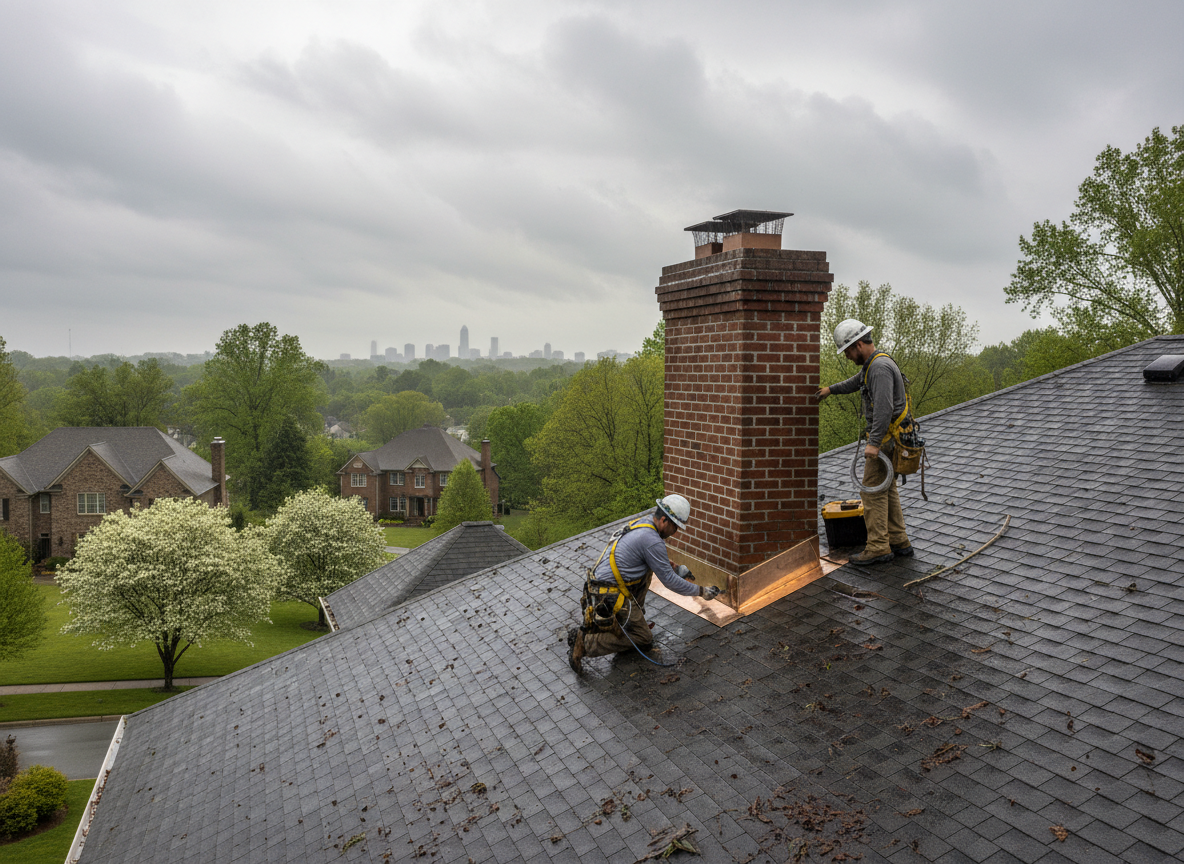
After heavy spring rains near Charlotte, chimney flashing repair on Mint Hill homes starts with removing damaged sections around the chimney base, installing new step flashing, and applying high-grade sealant, a process that takes 4-8 hours on most single-story structures in neighborhoods like Bainbridge.
Common Flashing Failures After Spring Rains
Mint Hill sits in Mecklenburg County with a humid subtropical climate that brings intense spring downpours followed by hot summers. These rains drive water under the flashing where it meets the roof, especially on homes built in the 1980s and 1990s around The Farm at Mint Hill. The repeated wetting and drying cycles cause metal to corrode and mortar joints to crack. Homeowners near Mint Hill Veterans Memorial Park often notice water stains on ceilings after storms because the original flashing was nailed directly into brick without proper counter-flashing. Soil in the area holds moisture longer than in drier regions, keeping the base of chimneys damp for days. This accelerates rust on galvanized flashing and lifts shingles at the penetration points. Checking the flashing after each major rain event prevents small gaps from turning into interior leaks that affect drywall and insulation in Bainbridge and surrounding subdivisions.
Repair Steps for Local Homes
Begin by inspecting the chimney from the roof during dry weather to locate lifted flashing or missing sealant. Remove the old flashing carefully to avoid damaging surrounding shingles, then cut new pieces of pre-formed step flashing to match the roof pitch common on Mint Hill residences. Slide each piece under the shingles and secure with roofing nails, overlapping the next course by at least 2 inches. Apply a bead of polyurethane sealant along the vertical leg where flashing meets the chimney masonry. On homes in The Farm at Mint Hill, add a layer of self-adhering membrane under the new flashing for extra protection against the area's frequent humidity. Finish by reinstalling shingles and testing with a garden hose to confirm no water enters the attic. This sequence addresses the exact water paths created by spring storms without requiring full chimney reconstruction. Chimney flashing repair follows these same field-proven steps on residential properties throughout the county.
Climate Factors in Mecklenburg County
The humid subtropical conditions around Charlotte produce spring rainfall totals that frequently exceed 4 inches in a single event, followed by high humidity that slows drying. This pattern stresses flashing joints more than the mild winters do. In Mint Hill, afternoon thunderstorms can dump water faster than gutters handle it, forcing runoff against the chimney base. Homes in Bainbridge sit on clay-heavy soils that retain water, keeping lower flashing sections wet longer and promoting corrosion. The temperature swings between cool nights and hot days cause expansion and contraction that loosens sealant beads within 3-5 years. Using aluminum or copper flashing instead of basic galvanized metal holds up better under these cycles. Pairing repairs with chimney leak repair stops moisture from reaching interior walls before summer heat returns.
Prevention Strategies for Future Seasons
Schedule a roof-level check each March before spring rains arrive to catch early sealant cracks. Homeowners in Clear Creek and Wilgrove can extend flashing life by adding a chimney cricket on wider chimneys to divert water flow. Keep trees trimmed near the roofline to reduce debris that traps moisture against flashing. After any repair, apply a breathable masonry sealer to the chimney exterior to limit water absorption during humid periods. These steps reduce the need for repeated flashing work on 1980s-era homes common throughout Mint Hill. For readers planning seasonal maintenance, see related guidance on preparing chimneys before temperature drops and typical costs for crown work on local properties.